
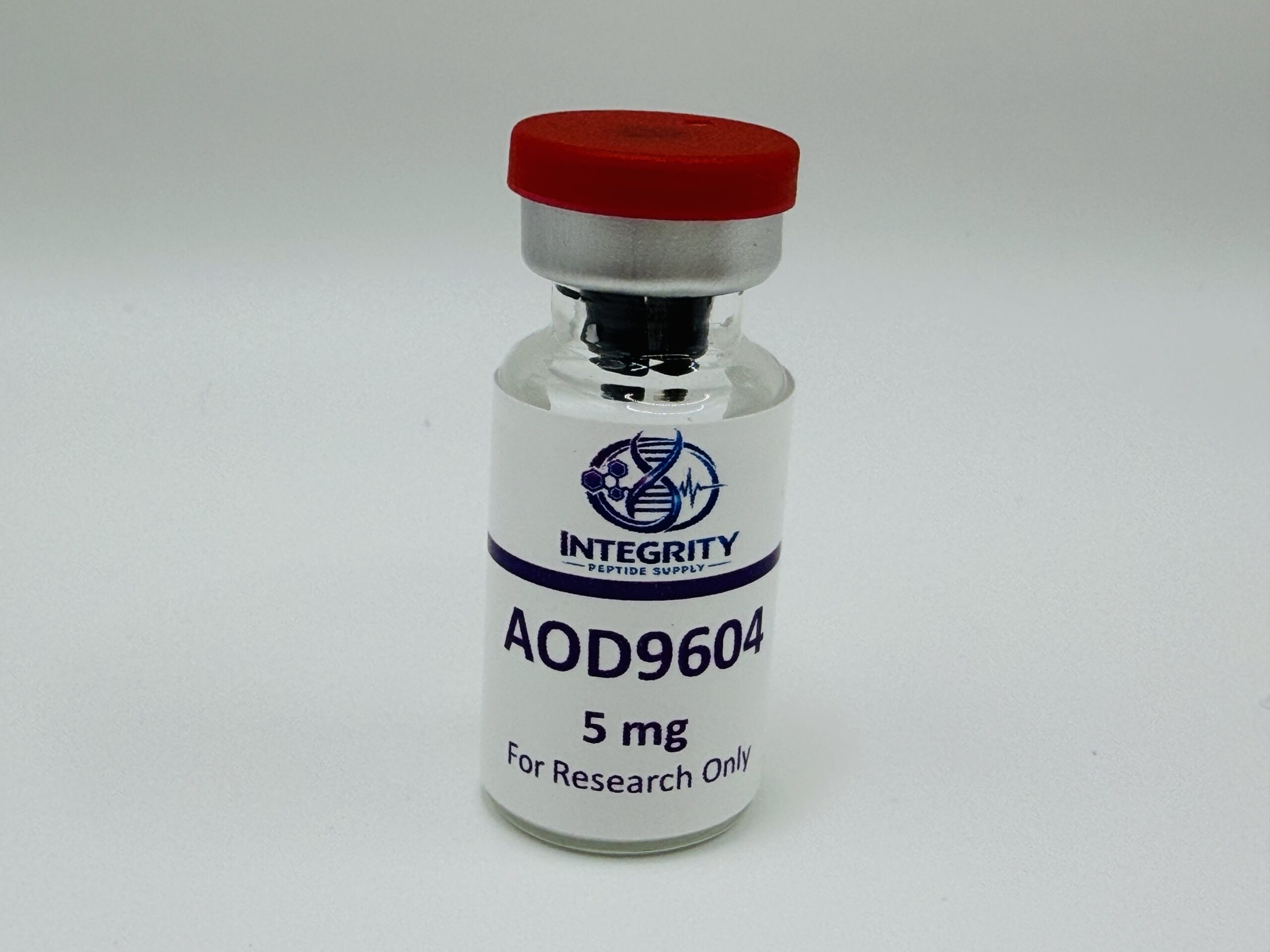
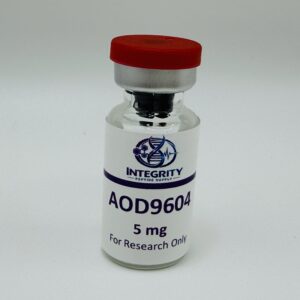
AOD 9604 is a synthetic peptide fragment derived from the C‑terminal region of human growth hormone (hGH) — specifically the sequence around amino acids 176–191, with an added N‑terminal tyrosine to improve stability.
- It’s a hexadecapeptide (16 amino acids in total).
- Designed to mimic the fat‑mobilizing (lipolytic) region of hGH while excluding the growth‑promoting effects associated with full‑length growth hormone.
- Not an FDA‑approved drug — its clinical development was discontinued, and it remains classified as a research compound.
⚙️ How It Works (Mechanism of Action)
🔹 Promotes Fat Breakdown (Lipolysis)
AOD 9604 appears to enhance lipolysis — the breakdown of stored triglycerides into free fatty acids — partly by increasing β3‑adrenergic receptor expression in adipose (fat) cells and activating downstream signaling pathways.
🔹 Inhibits Fat Formation (Lipogenesis)
It also downregulates lipogenesis, the biochemical process that converts other substrates into fat, helping to shift metabolism toward fat utilization instead of storage.
🔹 Selective Metabolic Effect (Non‑Hormonal)
Importantly, AOD 9604 does not bind to the growth hormone receptor, does not elevate IGF‑1 levels, and lacks the broad hormonal effects of hGH — meaning it doesn’t trigger the typical anabolic (growth) cascade.
🔹 Other Pathways
Some research suggests additional effects like increased overall energy expenditure and potential direct metabolic actions in fat cells beyond classic β3 pathways, though mechanisms aren’t fully defined.
Reviews
There are no reviews yet.