
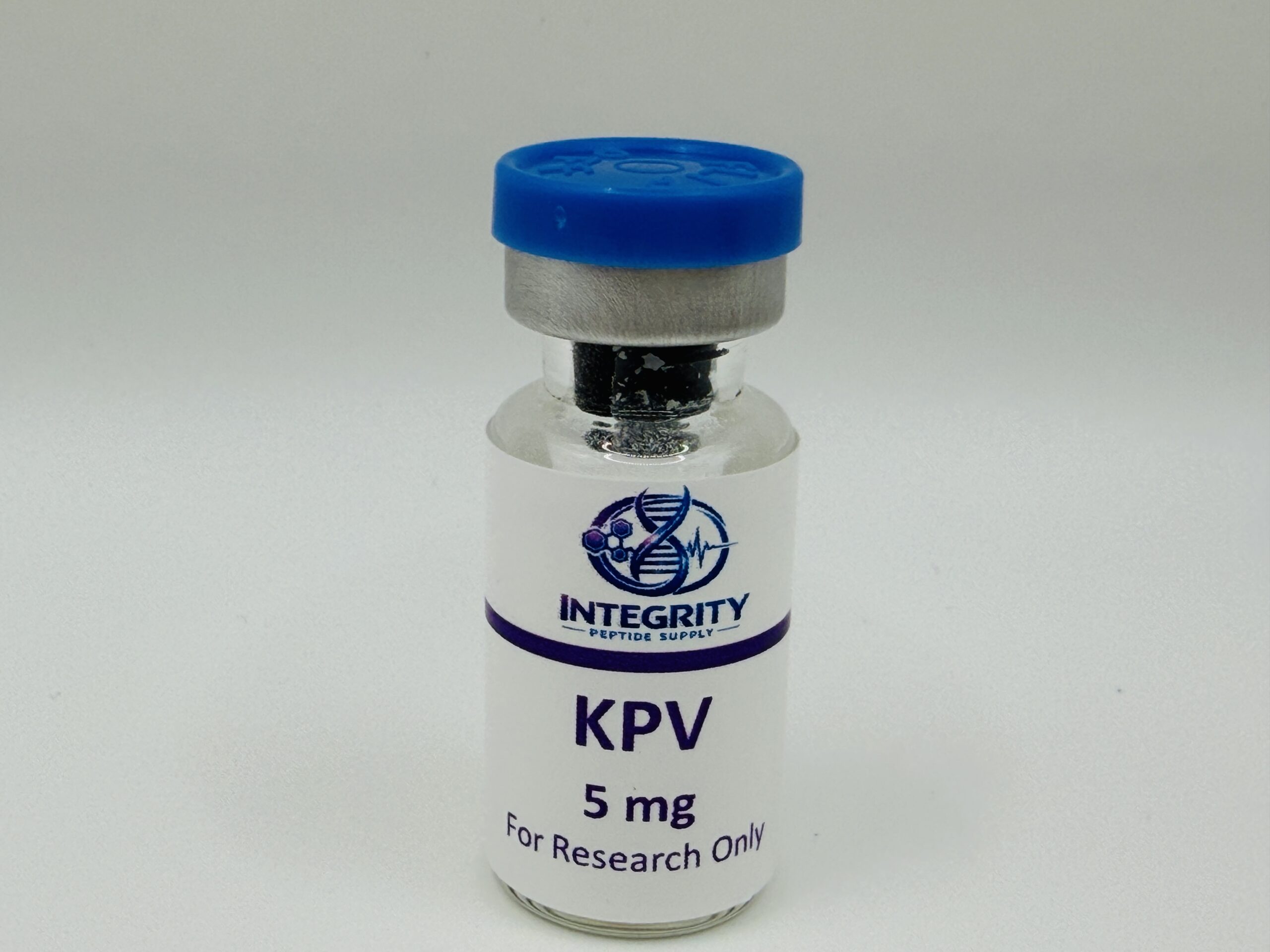
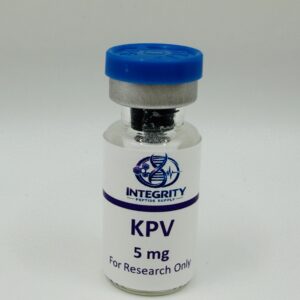
KPV (Lys-Pro-Val) is a small tripeptide fragment derived from the C-terminal end of alpha-melanocyte-stimulating hormone (α-MSH) — but unlike the full hormone, KPV retains powerful anti-inflammatory effects without hormonal or pigmentation effects.
🧬 What KPV Is
- Structure: A short peptide of three amino acids — lysine (K), proline (P), and valine (V).
- Origin: Derived from α-MSH, a naturally occurring hormone with anti-inflammatory and immune-modulating properties.
- Activity: Unlike α-MSH, KPV doesn’t act significantly through melanocortin receptors that influence pigmentation — it works through receptor-independent mechanisms to regulate inflammation.
📍 Research Applications & Areas of Interest
1. Anti-Inflammatory Studies
KPV is widely used in labs to explore inflammation and immune modulation in cell and animal models. It reduces inflammatory signaling without broadly suppressing immune function like steroids.
2. Gut Health & IBD Research
Preclinical models of colitis (inflammatory bowel disease) show that KPV can reduce intestinal inflammation, support mucosal healing and improve barrier integrity.
3. Skin & Epithelial Tissue Research
In studies on skin inflammation — like dermatitis or wound healing — KPV may calm local inflammatory responses and aid tissue repair.
4. Immunomodulatory Studies
Rather than suppressing immune activity, KPV appears to normalize or balance immune responses, which is of interest in autoimmune and chronic inflammation research.
Reviews
There are no reviews yet.